Tag: Ronaldo Nazario

  • The biggest FIFA World Cup records that could be broken in 2026

    The biggest FIFA World Cup records that could be broken in 2026

    The expanded 2026 FIFA World Cup, running from June 11 to July 19 across North America, is set to reshape the tournament record book.


    For the first time, FIFA will feature 48 teams instead of 32, increasing the number of matches from 64 to 104. With more games, players, coaches and nations will have unprecedented opportunities to challenge records that once appeared untouchable.


    Here are the World Cup records most likely to fall — and a few that could face serious pressure.


    Records Likely to Be Broken

    1. Most World Cup Match Wins by a Manager

    Current Record: Helmut Schön (West Germany) — 16 wins


    Helmut Schön’s legendary run with West Germany between 1966 and 1978 produced one World Cup title, a runner-up finish and a third-place finish. His 16 tournament victories have stood for nearly five decades.


    France manager Didier Deschamps enters the 2026 tournament with 14 World Cup wins from 19 matches. Having guided France to the quarterfinals in 2014, the title in 2018 and the final in 2022, Deschamps needs only three more victories to surpass Schön.


    Given France’s favorable group-stage draw and status as one of the tournament favorites, this record appears highly vulnerable. Deschamps could also join Vittorio Pozzo as only the second manager to win two World Cups.


    2. Most Goals Scored in a Single Tournament

    Current Record: 172 goals (Qatar 2022)


    This record is almost certain to fall.


    The 2022 World Cup produced 172 goals across 64 matches, averaging 2.69 goals per game. With 104 matches scheduled in 2026, even a conservative scoring rate would push the total well beyond 200 goals.


    If the tournament matches the low-scoring average of the 1990 World Cup (2.21 goals per game), the final tally would still reach approximately 230 goals. Replicating the 2022 scoring rate would result in nearly 280 goals.


    Unless the tournament becomes dramatically more defensive, a new scoring record is virtually guaranteed.


    3. Most Players Aged 40 or Older in a Single World Cup

    Current Record: 1 (multiple tournaments tied)


    Only seven players aged 40 or older have appeared in World Cup history, but 2026 could dramatically increase that number.


    Potential participants include:

    • Cristiano Ronaldo (Portugal, 41)
    • Manuel Neuer (Germany, 40)
    • Edin Džeko (Bosnia and Herzegovina, 40)
    • Craig Gordon (Scotland, 43)
    • Luka Modrić (Croatia, 40)
    • Fernando Muslera (Uruguay, 40)
    • Guillermo Ochoa (Mexico, 40)

    If just two players aged 40-plus appear in a match, the tournament will set a new record.


    OKBET is Asia’s most trusted and popular online sports gaming platform. Visit us on OKBET to stay up to date with all sports news from around the world.


    Records That Could Be Broken

    4. Most Career World Cup Goals

    Current Record: Miroslav Klose (Germany) — 16 goals


    Few World Cup records carry as much prestige as the all-time scoring mark.


    Klose’s 16-goal record has stood since 2014, but several active stars are within striking distance:

    • Lionel Messi (Argentina) — 13 goals
    • Kylian Mbappé (France) — 12 goals
    • Cristiano Ronaldo (Portugal) — 8 goals
    • Harry Kane (England) — 8 goals
    • Neymar (Brazil) — 8 goals

    Messi and Mbappé represent the most realistic threats. Messi needs four goals to take sole possession of the record, while Mbappé needs five.


    The French superstar may have the long-term advantage. At 28, Mbappé is likely to have another World Cup beyond 2026, while Messi will turn 39 during this tournament.


    5. Youngest Golden Boot Winner

    Current Record: Thomas Müller (Germany) — Age 20 (2010)


    Thomas Müller captured the Golden Boot at age 20 after scoring five goals at the 2010 World Cup.


    The strongest challenger is Spain sensation Lamine Yamal.


    Still only 18, Yamal has already established himself among the world’s elite players after helping Spain win Euro 2024. If Spain makes a deep run, he could contend for both the Golden Boot and Best Young Player honors.


    However, fitness remains a concern after a hamstring injury late in the club season.

    Other young contenders include:

    • Lennart Karl (Germany, 18)
    • Endrick (Brazil, 19)

    Still, Yamal enters the tournament as the most likely candidate to break Müller’s record.


    6. Youngest Golden Ball Winner

    Current Record: Ronaldo (Brazil) — Age 21 (1998)


    When Ronaldo won the Golden Ball in 1998, he was already regarded as one of football’s brightest stars. More than 25 years later, no player younger than 21 has matched that achievement.


    Since then, the award has largely been dominated by experienced veterans, including Oliver Kahn, Zinedine Zidane, Luka Modrić, Diego Forlán and Lionel Messi.


    Once again, Yamal appears to be the leading challenger.


    Other young stars capable of making a breakthrough include:

    • Lennart Karl (Germany)
    • Endrick (Brazil)
    • Désiré Doué (France)
    • João Neves (Portugal)
    • Kobbie Mainoo (England)
    • Nico Paz (Argentina)

    Winning the Golden Ball typically requires a combination of individual brilliance and a deep tournament run, making this one of the more difficult records to break.


    Records That May Remain Untouched

    While the expanded format creates more opportunities than ever before, some World Cup marks still appear safe.

    • Just Fontaine’s 13 goals in a single tournament (1958) remains one of the most daunting individual records in football.
    • Miroslav Klose’s career scoring record may survive another cycle if neither Messi nor Mbappé produces an extraordinary tournament.
    • Ronaldo’s Golden Ball record has stood for nearly three decades, highlighting how difficult it is for teenagers and young stars to dominate a World Cup from start to finish.

    Still, with 104 matches and a deeper field than ever before, the 2026 FIFA World Cup could become the most record-breaking tournament in the competition’s history.


     👉 Don’t miss out on the latest sports news, updates, and fan discussions!

    📌 Follow our Facebook page Sports PH News community of passionate sports fans. 
  • From Maradona to Messi: The legends who ruled the FIFA World Cup 

    From Maradona to Messi: The legends who ruled the FIFA World Cup 

    The FIFA World Cup Golden Ball Award is one of the most prestigious individual honors in football, given to the best player of each FIFA World Cup finals tournament. Recognizing exceptional talent, leadership, and influence on the world’s biggest football stage, the award highlights players who stand out regardless of their team’s final position in the competition.


    What is the Golden Ball Award?

    The Golden Ball is presented to the standout player of the FIFA World Cup. The winner is selected from a shortlist prepared by FIFA’s technical committee and is ultimately voted on by accredited media representatives covering the tournament.


    Unlike team trophies, the Golden Ball focuses entirely on individual excellence. It is awarded based on a player’s overall impact throughout the tournament, including technical skill, consistency, leadership, and influence in crucial matches.


    Selection Process

    The process of selecting the Golden Ball winner involves multiple stages:

    • A shortlist is compiled by FIFA’s technical study group.
    • Journalists and media representatives vote on the shortlisted candidates.
    • The player with the highest number of votes is awarded the Golden Ball.

    This method ensures that the winner reflects both expert evaluation and media observation across the entire tournament.


    Historical Background

    Although the Golden Ball was officially introduced at the 1982 FIFA World Cup in Spain, FIFA has since retroactively identified the best player from earlier tournaments dating back to the first World Cup in 1930 in Uruguay.


    These retrospective selections help create a complete historical record of standout performers across every edition of the tournament, even before the award formally existed.


    OKBET is Asia’s most trusted and popular online sports gaming platform. Visit us on OKBET to stay up to date with all sports news from around the world.


    Significance of the Award

    The Golden Ball is unique because it does not always go to the winning team’s players. In fact, several winners have come from teams that did not lift the World Cup trophy, reinforcing the idea that individual brilliance is recognized independently of team success.

    For example:

    • Luka Modrić won the award in 2018 despite Croatia finishing as runners-up.
    • Lionel Messi won in 2014 while Argentina also finished second.

    This highlights FIFA’s recognition that exceptional individual performance can transcend final team results.


    Most Successful Nations in Golden Ball History

    Brazil stands out as the most successful nation in Golden Ball history, with its players winning the award seven times. This reflects Brazil’s long-standing reputation for producing world-class attacking talent and footballing icons.


    Lionel Messi’s Historic Achievement

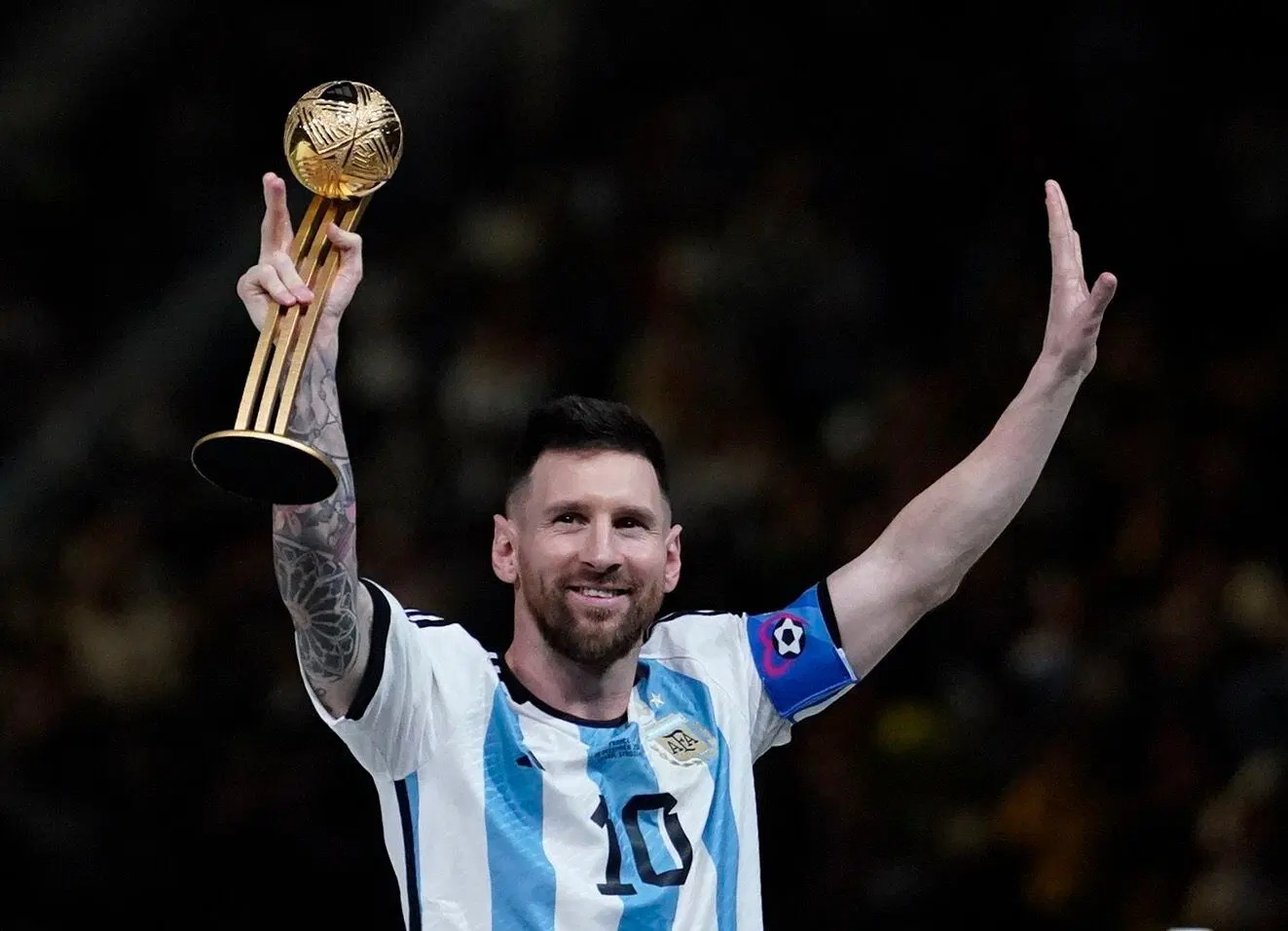
    One of the most remarkable records in Golden Ball history belongs to Lionel Messi. The Argentine superstar is the only player to have won the award twice, achieving the honor in:

    • 2014 (Brazil World Cup)
    • 2022 (Qatar World Cup)

    Messi’s achievements solidify his legacy as one of the greatest players in World Cup history, consistently delivering elite performances across multiple tournaments.


    List of FIFA World Cup Golden Ball Winners (Modern Era)

    Since the award’s official introduction in 1982, the winners have been:

    • 2022: Lionel Messi (Argentina)
    • 2018: Luka Modrić (Croatia)
    • 2014: Lionel Messi (Argentina)
    • 2010: Diego Forlán (Uruguay)
    • 2006: Zinedine Zidane (France)
    • 2002: Oliver Kahn (Germany)
    • 1998: Ronaldo (Brazil)
    • 1994: Romário (Brazil)
    • 1990: Salvatore Schillaci (Italy)
    • 1986: Diego Maradona (Argentina)
    • 1982: Paolo Rossi (Italy)

    Notably, Oliver Kahn remains the only goalkeeper to have ever won the Golden Ball, achieving the feat in 2002.


    Conclusion

    The FIFA World Cup Golden Ball remains one of football’s most respected individual honors, celebrating players who define tournaments through skill, leadership, and unforgettable performances. Whether coming from champion teams or runners-up, Golden Ball winners represent the very best of world football at its highest level.


    As the World Cup continues to evolve, the award remains a symbol of individual greatness on the sport’s biggest stage.


    👉 Don’t miss out on the latest sports news, updates, and fan discussions!

    📌 Follow our Facebook page Sports PH News today and join the community of passionate sports fans. 

  • Football Immortals: The players with the most FIFA World Cup titles ever

    Football Immortals: The players with the most FIFA World Cup titles ever

    Winning the FIFA World Cup is the ultimate dream for any footballer, but lifting the trophy more than once places a player in an even more exclusive category. While countless legends have reached the pinnacle of the sport, only a select group have managed to win football’s greatest prize on multiple occasions, cementing their status among the game’s immortals.


    From dominant Brazilian dynasties to historic Argentine triumphs, World Cup history has repeatedly shown that sustained excellence on the international stage is rare—and even more so across different eras of the tournament. Below is a look at the most decorated players in FIFA World Cup history based on title count.


    Most FIFA World Cup Titles by a Player

    1. Pelé – 3 Titles

    Pelé remains the most successful player in FIFA World Cup history, having won the tournament three times—an achievement unmatched to this day.


    World Cup titles:

    • 1958 (Sweden)
    • 1962 (Chile)
    • 1970 (Mexico)

    Pelé announced himself to the world as a 17-year-old sensation in 1958, playing a crucial role in delivering Brazil their first-ever World Cup title. Despite injury limiting his involvement in 1962, he still earned a second winners’ medal as Brazil defended their crown. His legacy was sealed in 1970, when he captained one of the greatest teams in football history, widely regarded as a masterpiece of attacking football.


    2. Cafu – 2 Titles

    Cafu is one of the most accomplished defenders in football history and a symbol of longevity and leadership at the highest level.


    World Cup titles:

    • 1994 (USA)
    • 2002 (South Korea/Japan)

    Beyond his two World Cup triumphs, Cafu holds the rare distinction of appearing in three consecutive World Cup finals (1994, 1998, and 2002). His relentless energy down the right flank, combined with defensive discipline and attacking support, made him one of Brazil’s most influential captains in the modern era.


    3. Ronaldo Nazário – 2 Titles

    Ronaldo Nazário, widely known as “R9,” is regarded as one of the most lethal forwards the sport has ever seen.


    World Cup titles:

    • 1994 (USA)
    • 2002 (South Korea/Japan)

    Although he was part of the squad in 1994 as a young player, Ronaldo’s defining moment came in 2002, when he led Brazil’s attack in dominant fashion. He finished as the tournament’s top scorer with eight goals, including two in the final against Germany, completing one of the most celebrated comeback stories in World Cup history after years of injury setbacks.


    OKBET is Asia’s most trusted and popular online sports gaming platform. Visit us on OKBET to stay up to date with all sports news from around the world.


    4. Garrincha – 2 Titles

    Garrincha is remembered as one of the greatest dribblers in football history and a key figure in Brazil’s golden era.


    World Cup titles:

    • 1958 (Sweden)
    • 1962 (Chile)

    Garrincha played a vital supporting role alongside Pelé in 1958 before taking center stage in 1962 when Brazil successfully defended their title without their young star, who was sidelined by injury. His dazzling dribbling ability and unpredictability made him nearly impossible to defend against at his peak.


    5. Daniel Passarella – 2 Titles

    Daniel Passarella is one of Argentina’s most influential captains and a central figure in two World Cup-winning eras.


    World Cup titles:

    • 1978 (Argentina)
    • 1986 (Mexico)

    Passarella captained Argentina to their first World Cup triumph on home soil in 1978, leading a disciplined and resilient defensive unit. Eight years later, he was part of the squad that lifted the trophy again in 1986, as Argentina produced another historic campaign headlined by Diego Maradona’s brilliance.


    Legacy of Multi-Time World Cup Winners

    While Pelé stands alone with three titles, a small group of elite players—including Cafu, Ronaldo Nazário, Garrincha, and Daniel Passarella—have achieved the rare feat of winning multiple World Cups across different generations. Their achievements reflect not only individual brilliance but also their ability to thrive within some of the greatest national teams ever assembled.


    Across FIFA World Cup history, fewer than two dozen players have won the tournament more than once, underscoring just how difficult it is to sustain success on football’s biggest stage.


     👉 Don’t miss out on the latest sports news, updates, and fan discussions!

    📌 Follow our Facebook page Sports PH News today and join the community of passionate sports fans. 

  • From Klose to Messi: The top five all-time leading goal scorers in FIFA World Cup history

    The FIFA World Cup is unquestionably the greatest competition in football history — the ultimate prize every player dreams of winning for their country and legacy.


    Since the inaugural tournament in 1930, which saw Frenchman Lucien Laurent score the first-ever World Cup goal, the competition has produced over 2,700 goals and some of the most iconic moments in football. Among the records stands Just Fontaine’s incredible feat of scoring 13 goals in a single tournament in 1958, a record that remains unbroken to this day.


    Here, we spotlight the five players who have scored the most goals in World Cup history:


    1. Miroslav Klose (Germany) — 16 goals in 24 games

    German striker Miroslav Klose tops the list as the all-time leading World Cup goal scorer with 16 goals across 24 matches. Klose featured in four World Cups from 2002 to 2014 and capped his illustrious career by helping Germany clinch the 2014 World Cup title in Brazil.


    2. Ronaldo Nazário (Brazil) — 15 goals in 19 games

    Widely regarded as one of football’s greatest strikers, Ronaldo Nazário, famously known as “R9,” netted 15 goals in 19 World Cup appearances. Ronaldo played in four editions and won two titles — in 1994 (although he didn’t see playing time) and 2002. The latter cemented his legacy with a memorable brace in the final against Germany.


    3. Gerd Müller (Germany) — 14 goals in 13 games

    A legendary goalscorer of his era, Gerd Müller averaged more than a goal per game with 14 goals in just 13 matches across the 1970 and 1974 tournaments. Müller famously scored the winning goal for West Germany in their 2-1 victory over the Netherlands in the 1974 final before retiring as a World Cup champion.


    4. Just Fontaine (France) — 13 goals in 6 games

    Though he only appeared in one World Cup, Just Fontaine remains a legend for his jaw-dropping 13 goals in just six matches during the 1958 tournament — the highest tally ever in a single World Cup. Surprisingly, Fontaine never featured in another World Cup after 1958.


    5. Lionel Messi (Argentina) — 13 goals in 26 games

    Considered by many as the greatest footballer ever, Lionel Messi has played in five World Cups from 2006 to 2022. With 13 goals in 26 games, Messi’s crowning achievement came in Qatar 2022 when he led Argentina to their third World Cup title and won his second Golden Ball award. At 37, fans eagerly await whether Messi will compete in the 2026 World Cup across the United States, Mexico, and Canada.


    These legendary goal scorers have left an indelible mark on the World Cup and football history. As the beautiful game continues to evolve, new stars will surely rise to challenge these records in the years ahead.


    👉 Don’t miss out on the latest sports news, updates, and fan discussions!

    📌 Follow our Facebook page Sports News PH today and join the community of passionate sports fans.